Technique · Beginner

Pickleball Backhand Fundamentals: One-Handed Technique Explained

Player hitting a one-handed backhand in pickleball
The short answer

A one-handed backhand uses the same continental grip as your forehand, with your shoulder turned and the paddle brought across your body before swinging forward and slightly up through contact. Most consistency issues come from a late turn or an unstable wrist, not lack of arm strength.

Key takeaways

  • The continental grip works for backhand without switching from forehand.
  • Turn your shoulder early — a late turn is the most common backhand error.
  • Keep the wrist stable through contact for consistent direction and depth.
  • The backhand doesn't need power — control and placement matter more.

Why the backhand feels harder at first

Most players are naturally weaker on their backhand simply from less repetition, not because it's a fundamentally harder shot. Using the continental grip covered in ready position and grip, the same grip serves both forehand and backhand without needing to switch mid-point — the difference is body rotation, not grip change.

The correct backhand motion

Turn your shoulders early so your non-paddle side faces the net, bringing the paddle across your body. Swing forward and slightly upward through the ball, contacting it out in front of your body rather than beside or behind you. A late shoulder turn is the single most common cause of a weak, inconsistent backhand.

Keeping the wrist stable

Just like the dinking and reset shots, a stable wrist on the backhand produces far more consistent direction and depth than a loose, wristy swing. Let your shoulder and forearm drive the shot; the wrist should stay relatively fixed through contact.

Building backhand consistency

Backhand consistency comes from repetition more than any single technical fix. Practise backhand-only rallies with a partner, focusing on depth and direction rather than power. Once the backhand return is solid, layer in the depth principles from return of serve depth — the same rules apply regardless of which wing you're hitting from.
Related reading

Two hands,
more power

If a one-handed backhand still feels unstable, a two-handed grip can add control and confidence on that side. See the full comparison.

Read the guide
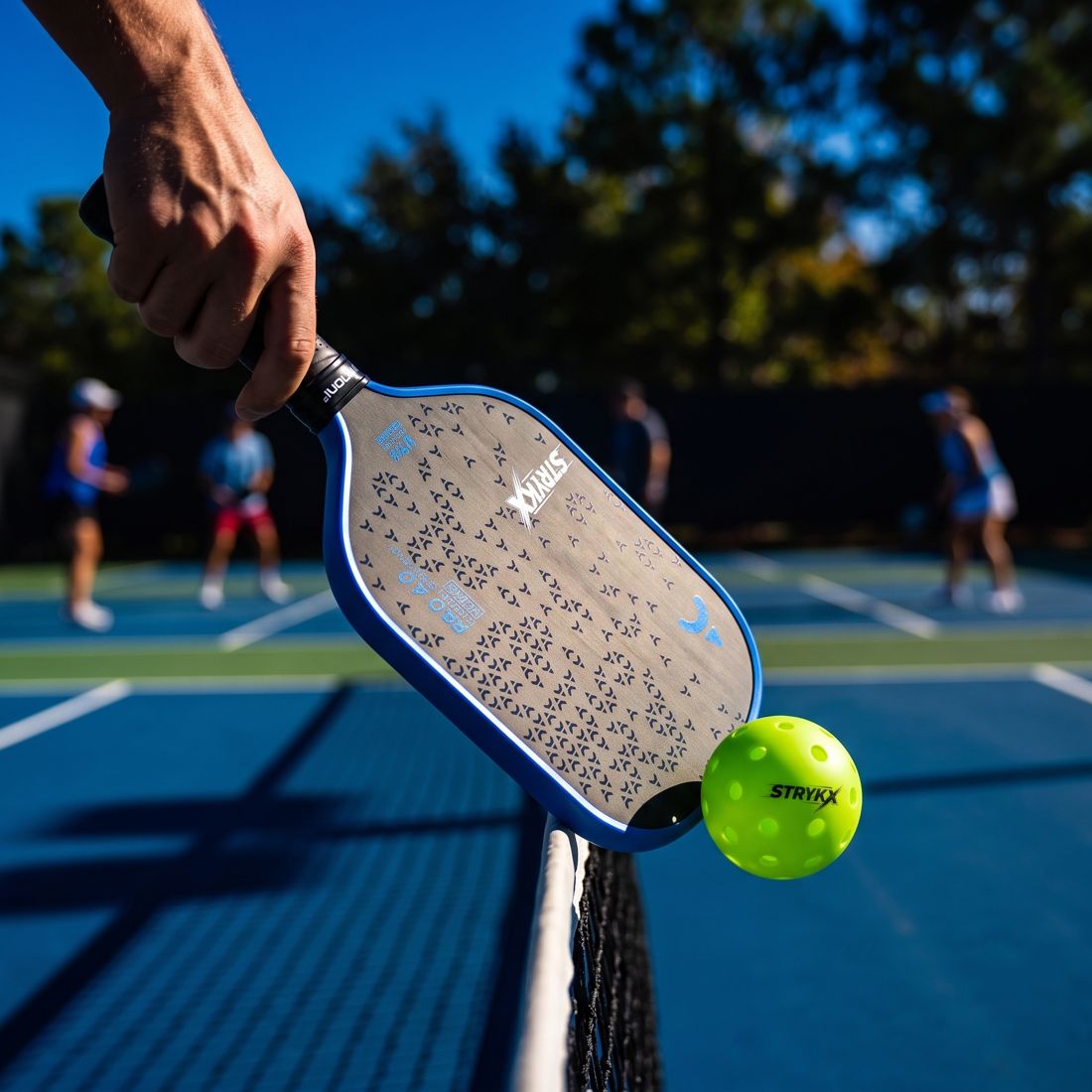
Player hitting a backhand shot with a STRYKX paddle

Frequently asked questions

Do I need a different grip for my pickleball backhand?

No. Most players use the same continental grip for both forehand and backhand, which avoids the need to switch grips mid-point during fast exchanges.

Why is my backhand weaker than my forehand?

Usually simple lack of repetition rather than a technical limitation. A late shoulder turn and an unstable wrist are the two most common technical issues that make the backhand feel harder than it needs to be.

Should I use power on my backhand?

Not primarily. Control and consistent placement matter more than power on the backhand — a well-placed, moderate-pace backhand beats an inconsistent hard one.

How can I improve my backhand faster?

Dedicated backhand-only rally practice, focused on depth and direction rather than power, builds consistency faster than trying to fix it only in match play.

STRYKX Playbook · Technique · Reviewed July 2026