Technique · Beginner

Pickleball Ready Position and Paddle Grip Explained

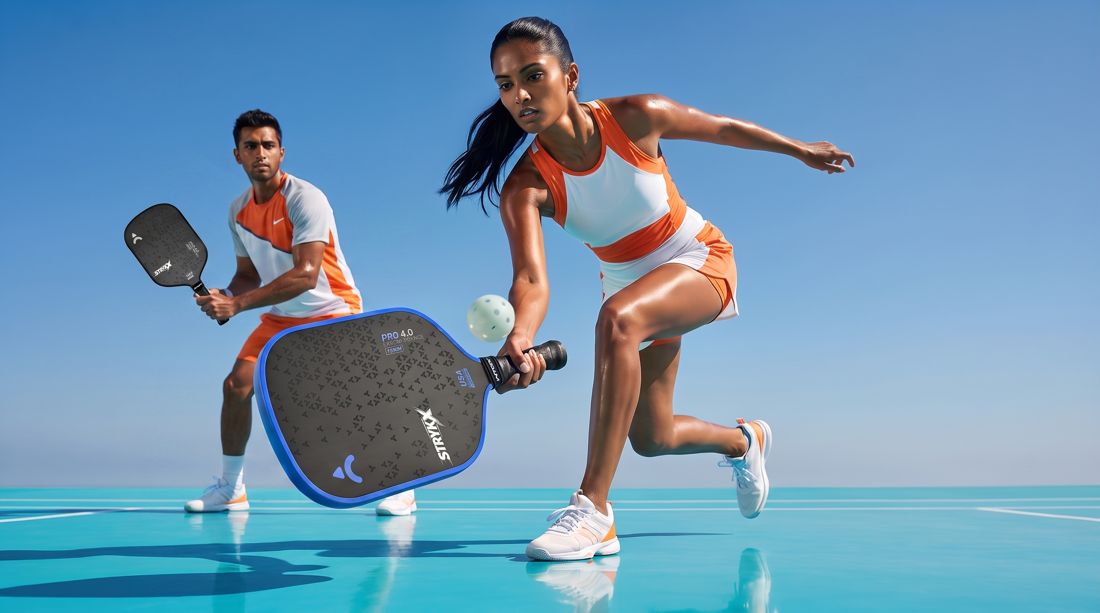
Player in the correct pickleball ready position at the net
The short answer

The ready position is a low, balanced stance with knees bent, weight forward on the toes, and the paddle held up in front of the body at chest height, angled slightly. Most players use a continental grip — like holding a hammer — which allows quick switches between forehand and backhand without changing grip.

Key takeaways

  • Ready position: knees bent, weight forward, paddle up at chest height.
  • The continental grip works for both forehand and backhand without switching.
  • A relaxed grip pressure improves feel and reduces arm fatigue.
  • Ready position is the base you return to after every shot.

The ready position stance

Between shots, your default stance should be low and balanced: knees bent, feet roughly shoulder-width apart, weight forward on the balls of your feet, paddle held up in front of your chest. This position lets you split step and react in any direction without wasted movement.

The continental grip

Most pickleball players use a continental grip, similar to holding a hammer, with the paddle edge roughly perpendicular to the ground when relaxed. This grip is a compromise that works reasonably well for both forehand and backhand shots without needing to switch mid-point — important given how fast exchanges happen at the net.

Grip pressure

Hold the paddle firmly enough to control it, but not in a tight, white-knuckle grip. A relaxed grip improves feel and touch on soft shots like dinks and drops, and reduces fatigue and strain in the forearm over a long session or match.

Returning to ready position

After every shot, the habit to build is returning immediately to the ready position — paddle up, knees bent — rather than standing tall or letting the paddle drop. This single habit underlies almost everything else in the game, from kitchen positioning to blocking hard-hit balls.
Gear that helps

A grip built
to hold

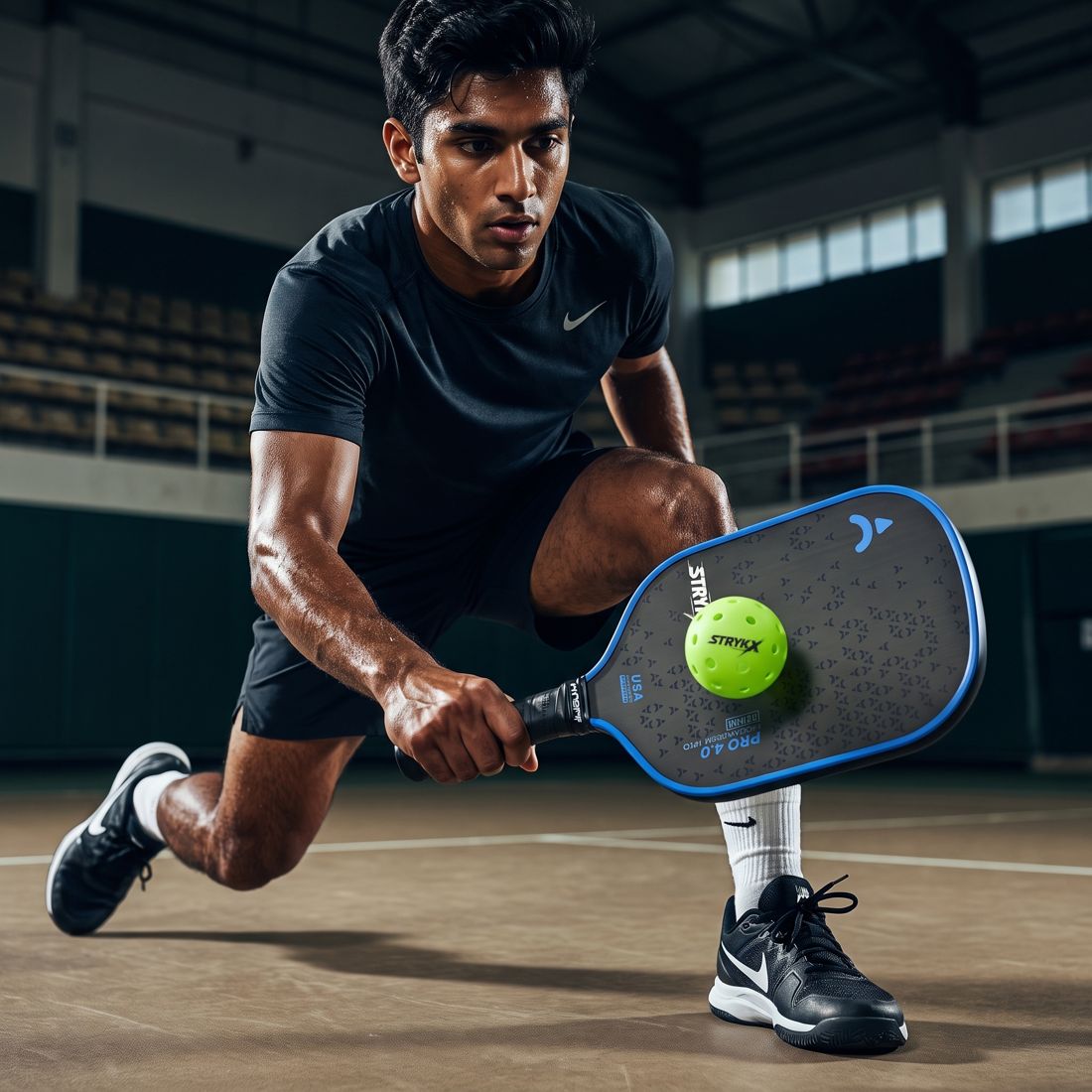
The STRYKX Pro 4.0's perforated handle stays secure through long, sweaty sessions, so grip pressure stays where you want it rather than compensating for slip.

Shop the Pro 4.0
Close-up of the STRYKX Pro 4.0 paddle handle

Frequently asked questions

What is the correct ready position in pickleball?

A low, balanced stance with knees bent, weight forward on the toes, and the paddle held up in front of your chest, angled slightly — ready to move or react in any direction.

What grip should beginners use in pickleball?

Most players use a continental grip, similar to holding a hammer, which works reasonably well for both forehand and backhand shots without needing to switch mid-point.

How tightly should I hold my paddle?

Firmly enough for control, but not in a tight, tense grip. A relaxed hold improves touch on soft shots and reduces forearm fatigue over a long session.

Why does the ready position matter so much?

It's the base stance you return to after every shot, and it directly affects how quickly and effectively you can react to the next ball, especially in fast net exchanges.

STRYKX Playbook · Technique · Reviewed July 2026