Technique · Intermediate

How to Add Topspin and Slice to Your Pickleball Shots

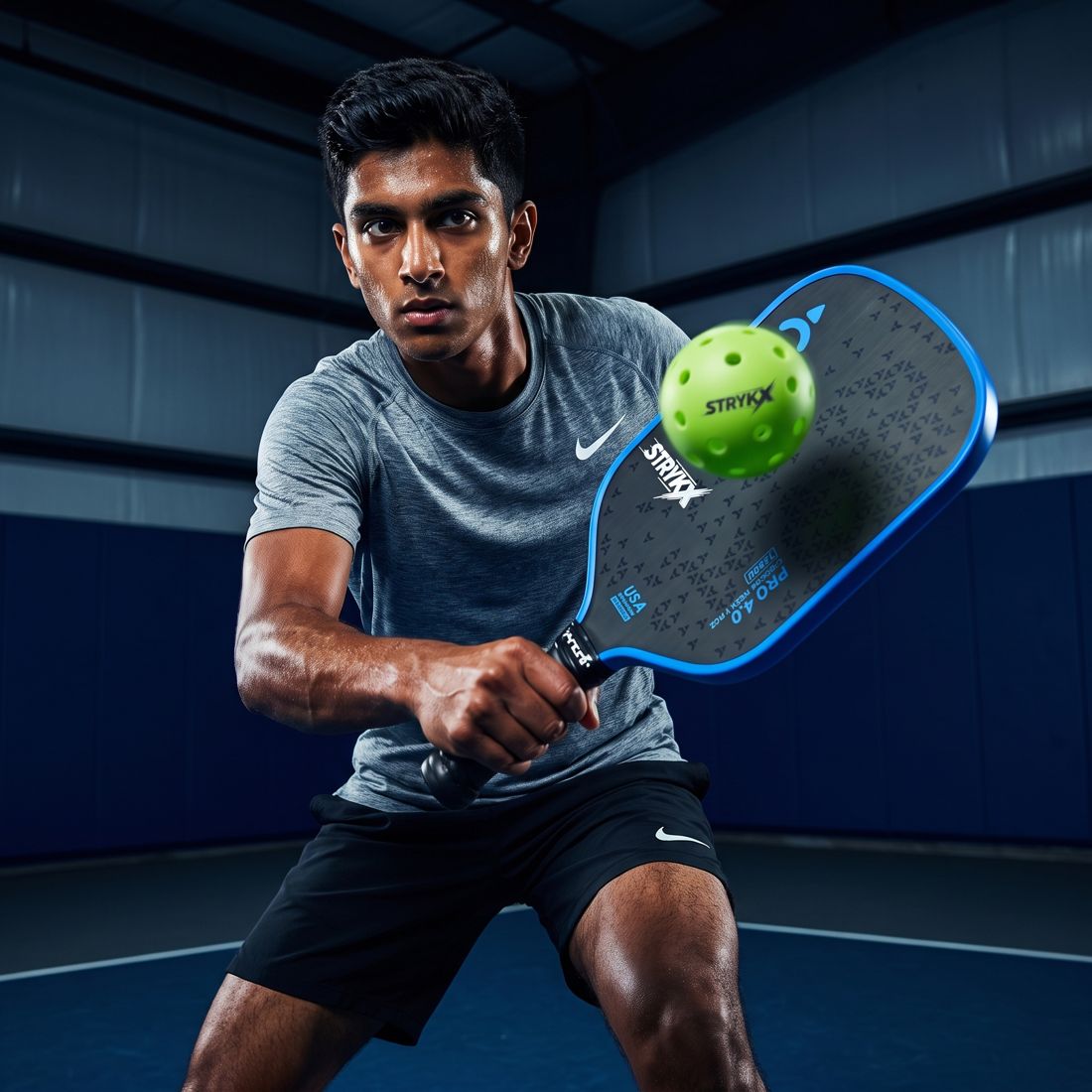
Player striking a pickleball with a spin-generating low-to-high swing
The short answer

Topspin comes from brushing up the back of the ball with a low-to-high swing path and a slightly closed paddle face; slice comes from brushing down and across with an open face. Both depend on racquet speed at contact and a textured paddle surface that grips the ball for a fraction longer.

Key takeaways

  • Topspin: low-to-high swing, closed face, brush the back of the ball.
  • Slice: high-to-low swing, open face, brush under and across.
  • Racquet-head speed generates spin — arm strength alone doesn't.
  • A textured carbon face holds the ball longer at contact, adding rotation for the same swing.

Why spin matters in pickleball

Spin changes how a ball behaves after the bounce. Topspin makes a ball dip and kick forward, useful for drives that need to dip under an opponent's paddle. Slice keeps the ball low and skidding, useful for serves and resets that you want to stay below the net.

Spin isn't about hitting harder — it's about swing path and contact. Once you're generating consistent topspin, it pairs naturally with the third shot drop: a drop with slight topspin dips faster and is harder to attack.
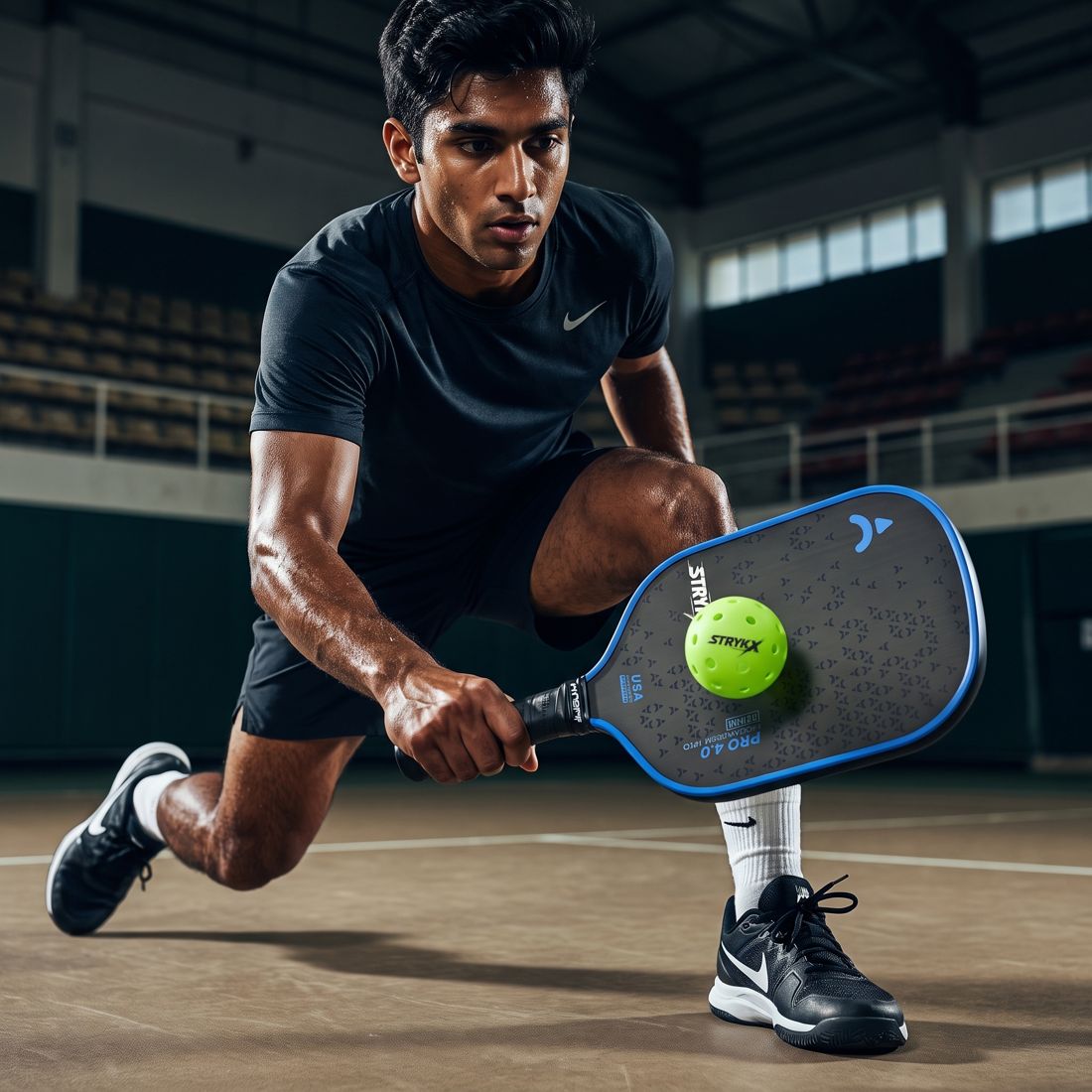
Player brushing up the back of the ball to generate topspin
Low-to-high, closed face — the mechanics of topspin.

How to generate topspin

Start the paddle below the ball and accelerate upward, closing the face slightly as you brush the back of it. The sensation should be a lift-and-roll, not a flat strike. More racquet-head speed at contact means more rotation — a slow, deliberate swing generates very little spin regardless of arm strength.

Topspin drives are most useful on the third shot when the return sits up high, and on passing shots when your opponent is at the net.

How to generate slice

Slice reverses the motion: start the paddle above the ball and brush downward and across, keeping the face slightly open. This is the standard technique for a low, skidding serve — see serve technique and power for how slice interacts with serve depth and pace.

A well-sliced return stays low after the bounce, forcing your opponent to hit up on their third shot — the opposite of what they want.
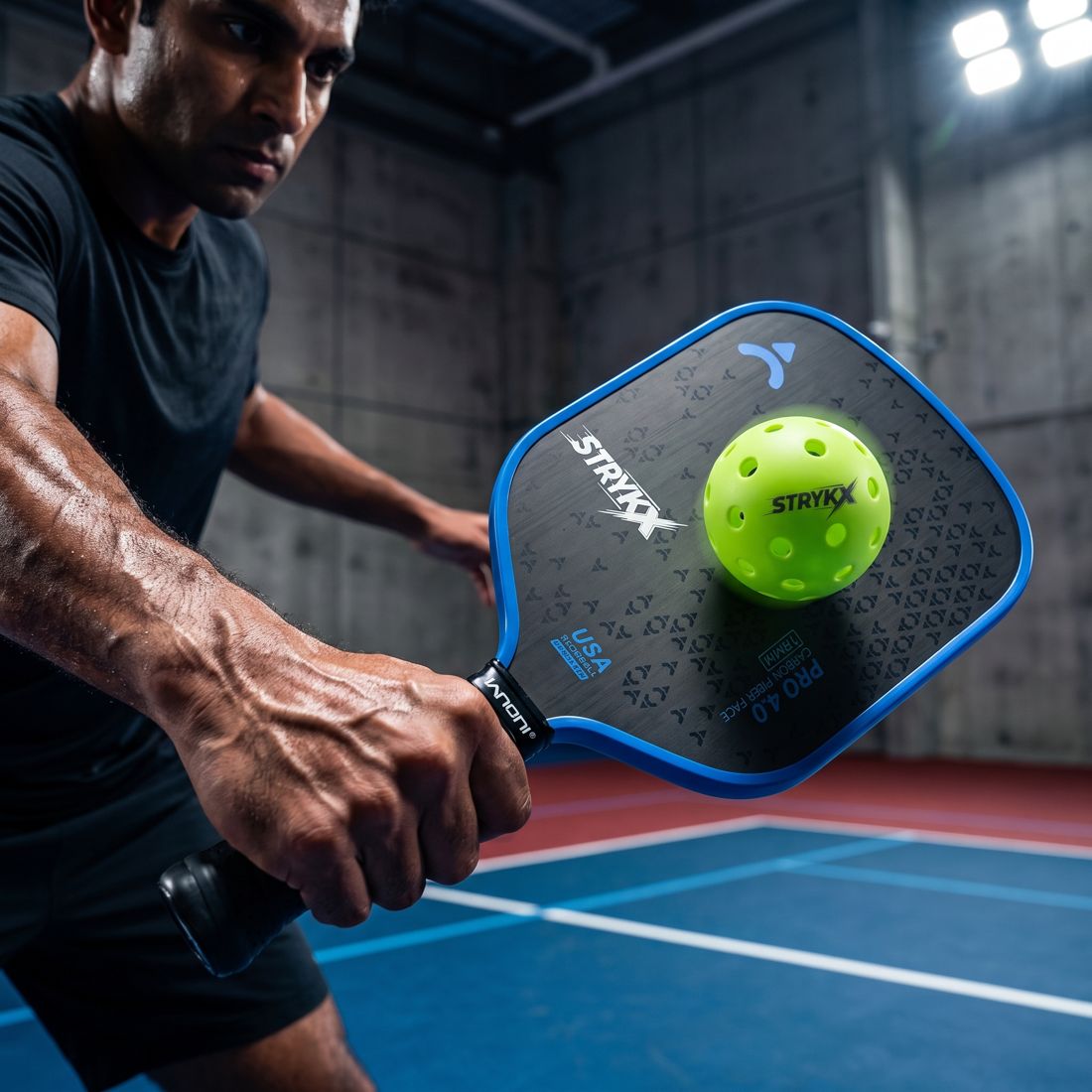
Close-up of paddle-to-ball contact showing spin brush technique
The paddle surface texture is doing real work at the moment of contact.

Why paddle surface matters for spin

Spin is generated at the point of contact, and how long the ball stays on the paddle face during that contact directly affects how much rotation you can add. A textured, raw carbon face — like the T700 carbon used on the STRYKX Pro 4.0 — grips the ball a fraction longer than a smooth or painted surface, letting the same swing produce more rotation. This is a gear factor, not just a technique factor.

How to add topspin, step by step

  1. 1

    Start low

    Position the paddle below the intended contact point, face slightly closed.

  2. 2

    Accelerate upward

    Drive the paddle head up and through the ball, not just forward.

  3. 3

    Brush, don't slap

    Contact the lower-back part of the ball and roll up and over it.

  4. 4

    Follow through high

    Finish with the paddle face pointing up and forward — this confirms you brushed rather than flattened.

  5. 5

    Increase racquet speed gradually

    Add pace to the swing only once the brushing motion is consistent, since speed amplifies spin, not accuracy.
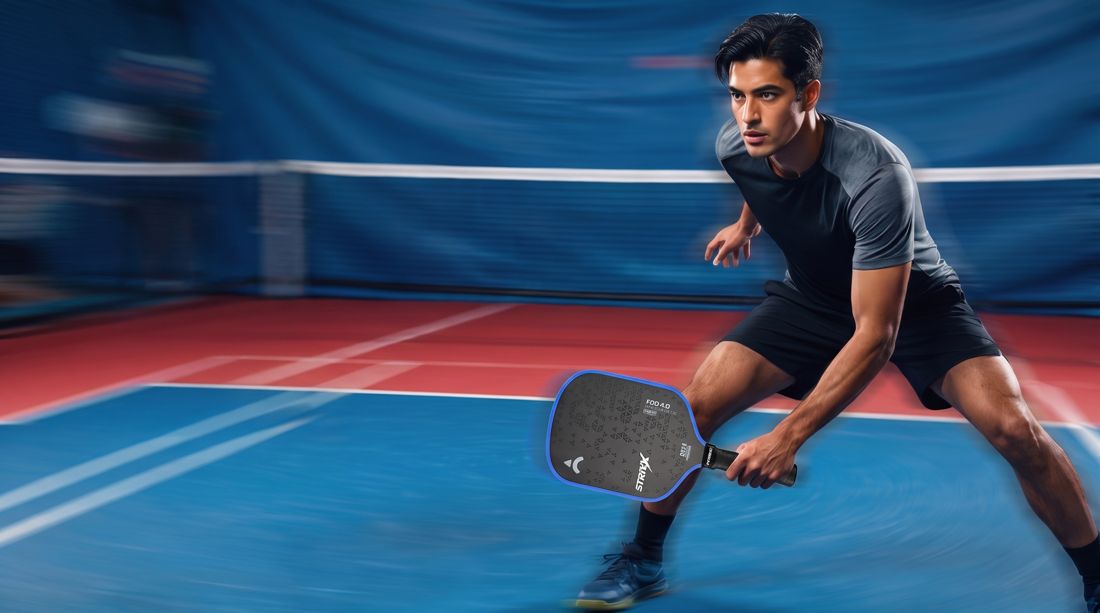
Gear that helps

T700 raw carbon,
built for spin

The STRYKX Pro 4.0's raw carbon face holds the ball a fraction longer at contact, so the same swing puts more rotation on the ball — and the texture keeps biting for a full season.

Shop the Pro 4.0
STRYKX Pro 4.0 raw carbon paddle face close-up

Frequently asked questions

How do you add topspin in pickleball?

Swing the paddle low to high with a slightly closed face, brushing up the back of the ball rather than striking it flat. Racquet-head speed at the point of contact is what generates rotation.

How do you hit a slice shot in pickleball?

Slice uses the opposite motion to topspin: start the paddle above the ball and brush down and across with an open paddle face, keeping the ball low and skidding after the bounce.

Does paddle surface affect spin?

Yes. A textured, raw carbon fibre face grips the ball slightly longer at contact than a smooth or painted surface, which increases how much rotation the same swing can generate.

Why isn't my topspin working even though I swing hard?

Spin comes from swing path and contact, not raw power. If the paddle face is flat or closed too much, or the swing is more forward than upward, you'll get pace without rotation. Focus on brushing up the back of the ball.

STRYKX Playbook · Technique · Reviewed July 2026