
Scoring basics
A standard game is played to 11 points, and you must win by at least 2. Only the serving team can score a point — if the returning team wins the rally, no point is awarded, but the serve passes to the other team (or player). For a deeper walkthrough of how the score is called out loud in doubles, see scoring explained.
The two-bounce rule
After the serve, the ball must bounce once on the returning side, and then once more on the serving side, before anyone is allowed to hit it out of the air (a volley). This is what forces the serving team to hit a third shot drop rather than rushing the net immediately — it's the rule that shapes the entire early structure of a point.
The kitchen (non-volley zone)
The kitchen is the 7-foot zone on each side of the net where volleying is illegal at all times, regardless of the two-bounce rule. You can stand in the kitchen and hit a ball that has bounced, but you cannot step in and volley — even your momentum carrying you in after a volley counts as a fault. See kitchen positioning for how this rule shapes strategy at the net.
The serve
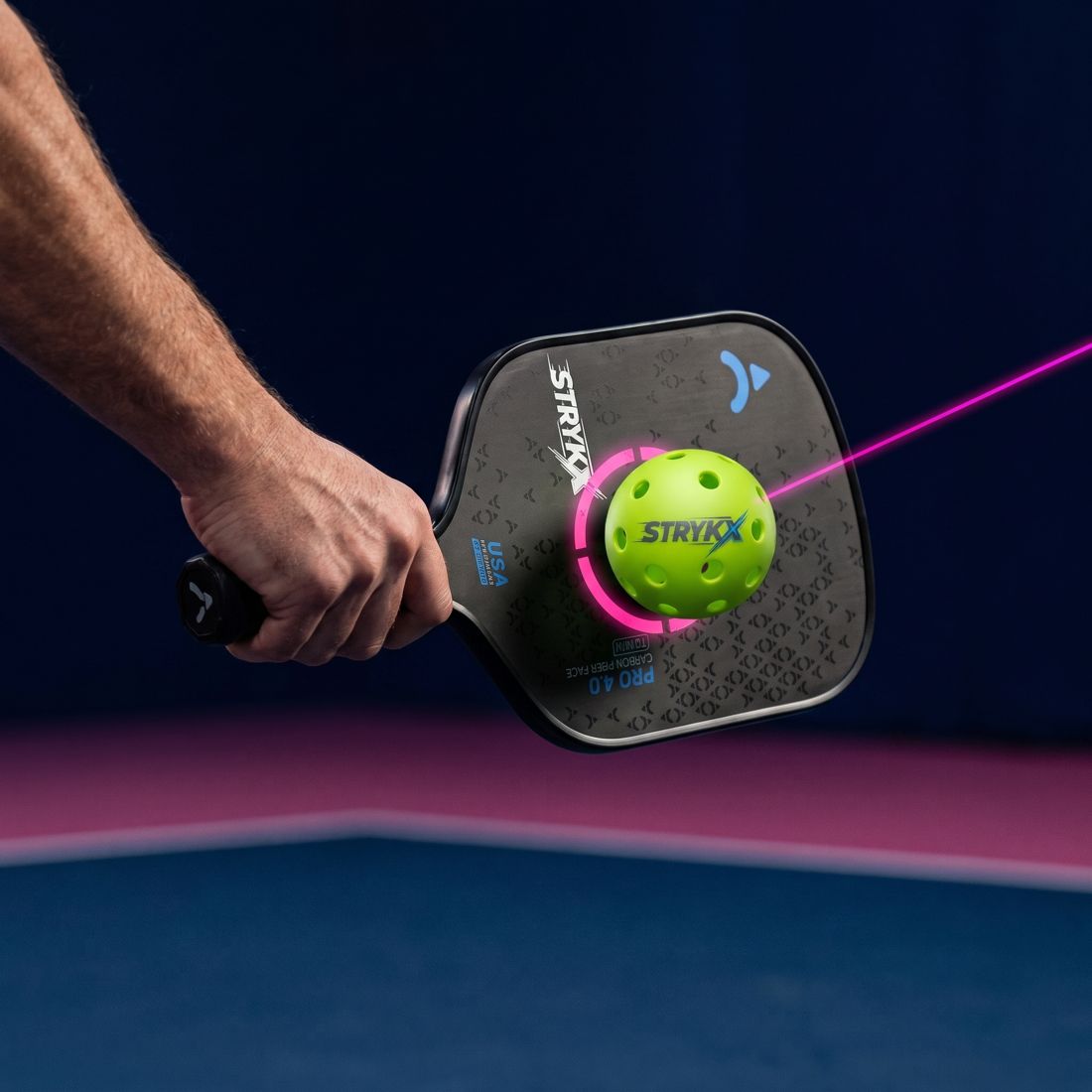
Serves must be hit underhand, with contact below the waist, and must land in the correct diagonal service box, clearing the kitchen. For the full mechanics and 2026 rule specifics, see legal serve 2026.
Common faults
A fault ends the rally and is called for: hitting the ball into the net, hitting it out of bounds, volleying while touching the kitchen, volleying before the two-bounce rule is satisfied, or a serve that doesn't land in the correct box. Learning to recognise these in real time takes a few games — most new players pick it up quickly by playing rather than memorising the list.