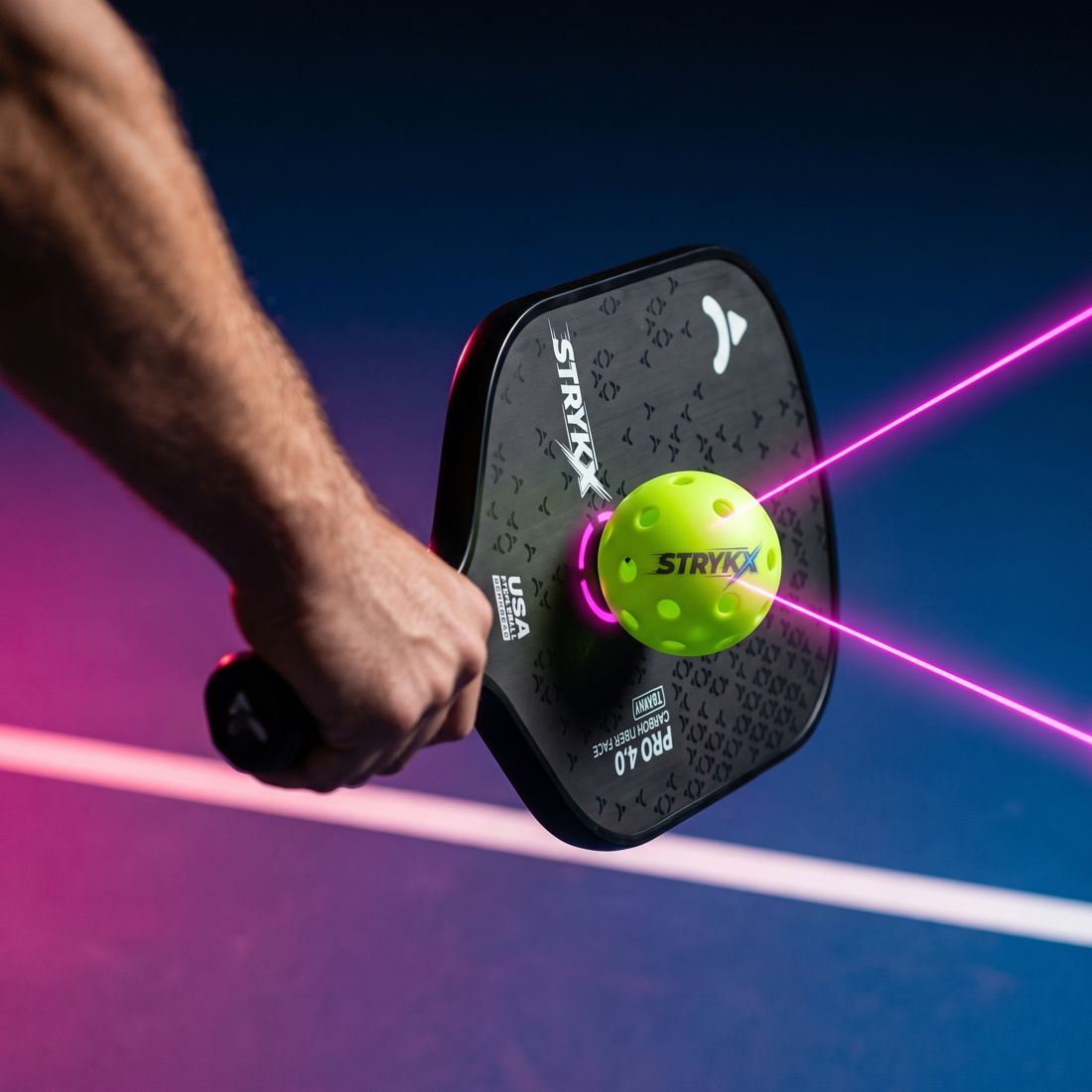
Why reading matters more than reacting
By the time the ball reaches you, it's often too late to fully react — especially at the kitchen line, where the distance is short and the time to respond is small. Reading your opponent means picking up cues before contact, so you're already moving in the right direction as the ball leaves their paddle.
This skill matters most once you're both at the kitchen line, where reaction windows shrink to a fraction of a second.
What to watch for before contact
Paddle face angle: an open, upward-tilted face usually means a soft shot — a dink or drop. A closed, flatter face usually means a harder, flatter drive.
Body weight: weight shifting forward and low into the shot typically signals more pace. Weight staying back or neutral usually signals a soft, controlled shot.
Backswing length: a longer, more committed backswing usually means more power is coming; a short, compact motion usually means a controlled placement shot.
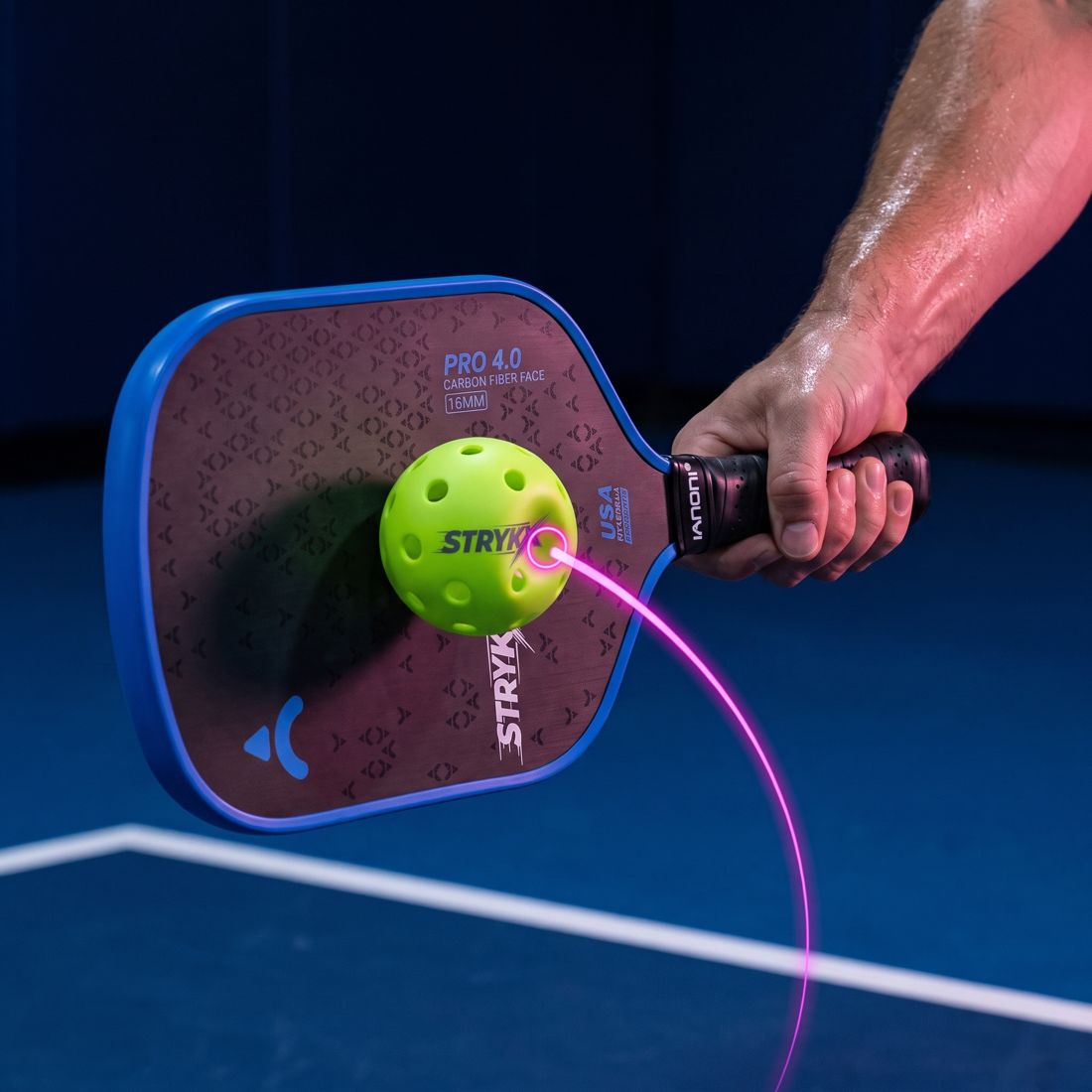
Tracking patterns over a match
Beyond single-shot cues, most players have tendencies that repeat under pressure — a favourite direction on the third shot, a predictable response when pushed wide. Pay attention across the match, not just point to point. This pairs well with strategies like beating bangers, where recognising a predictable pattern of aggression lets you anticipate and counter it rather than just react.
Turning reads into positioning
A read is only useful if it changes what you do. If you see a dink coming, you can afford to stay tight to the line. If you see the cues for a drive, shift your weight back slightly and get your paddle up. Combine this with disciplined poaching — reading a weak setup is exactly what tells you it's safe to cross and attack.